
ASHRAE energy audits — Level 1, 2 and 3: which one your facility needs and what each includes
Energy audits are not all the same. What each ASHRAE level includes, which one fits the decision you need to make, and how to avoid paying for a report that ends up in a drawer.
By David Bermúdez · November 20, 2026
“Energy audit” is one of those terms everyone uses differently: from a walk with a notepad to an investment-grade study. The standard that organizes the conversation is ASHRAE’s, which defines three levels with very different scopes — and prices. This guide, written for mid-size and large commercial and industrial operations in the Dominican Republic and the Caribbean, explains what you are buying at each level and which one makes sense for the decision you want to make.
What is an ASHRAE Level 1 energy audit?
Level 1 is the reconnaissance assessment: a facility walk-through, analysis of 12+ months of utility bills, and interviews with operations staff. The deliverable identifies low- and no-cost measures — schedule adjustments, setpoints, obvious leaks — and rough savings ranges for larger measures.
What it is for: prioritizing. Knowing whether there is enough money on the table to justify a deeper study. It is fast and relatively inexpensive, but its figures are not meant to approve large investments — that is not its purpose.
What does Level 2 add — and why is it the decision-grade standard?
Level 2 adds measurement and engineering: it breaks consumption down by end use (HVAC, refrigeration, lighting, process, etc.), analyzes each system on site, and delivers a list of savings measures with their estimated investment, expected annual savings and payback, measure by measure. It is the level ASHRAE recommends for most commercial and industrial buildings, and the one Boost performs.
Our variant: we run Level 2 on circuit-level monitoring data, not just bills and spot measurements. The difference is substantial — instead of estimating what your air conditioning consumes, we measure it week after week. Measures come out prioritized on real data, and the baseline is ready to verify savings afterwards under IPMVP.
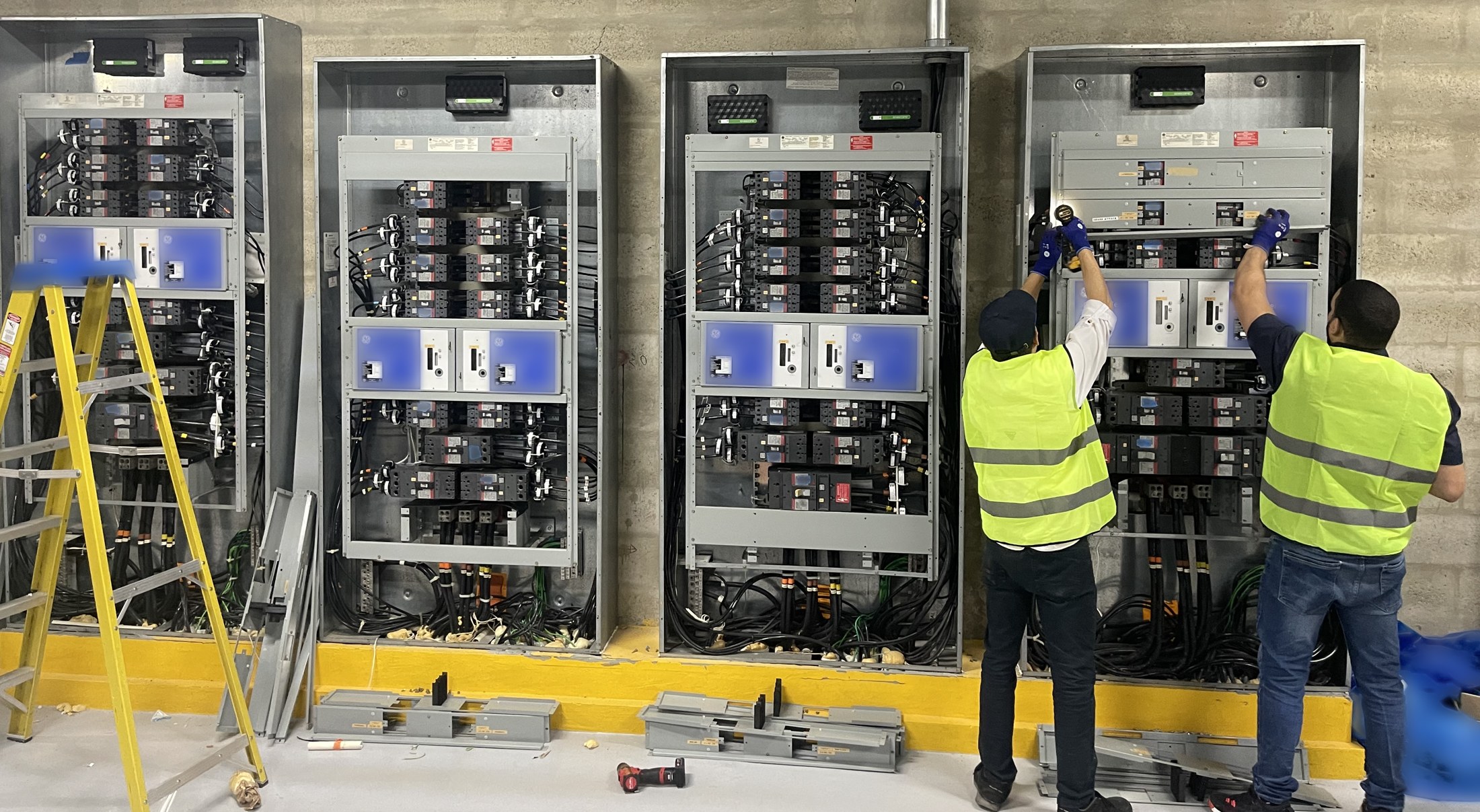 The on-site survey is the heart of Level 2: real measurement at the panels, not paper estimates.
When is a Level 3 justified?
Level 3 — often called investment grade — takes the big measures from Level 2 and develops them with detailed engineering: extended measurements, modeling, rigorous financial analysis. It is used when the decision involves significant capital — chiller replacement, cogeneration, system redesign — and the bank or corporate office demands numbers defensible at investment-project level.
The healthy sequence is progressive: a well-executed Level 2 tells you which measures deserve detailed engineering. Jumping straight to Level 3 without that prioritization usually means overpaying.
How do I avoid paying for a report that ends up in a drawer?
That is the real risk with audits: a handsome document nobody executes. Three criteria cut that risk to nearly zero:
- Demand measurement, not just estimates. An audit built on measured data produces measures management believes — and executes.
- Demand payback per measure, not one global “savings potential”. Decisions are made measure by measure.
- Ask what happens afterwards. If the auditor offers no savings verification (IPMVP) and no implementation support, the report is born orphaned. At Boost the audit is the middle step of a path that starts with measurement and ends with savings verified on your bill.
Frequently asked questions
How long does a Level 2 audit take?
It depends on the size and complexity of the facility: Boost’s typical fieldwork takes 1 to 7 days. When the facility is already monitored with Eniscope, the analysis is faster and produces better numbers.
Do I need an audit if I already have monitoring?
They complement each other: monitoring tells you what is happening in real time; the audit turns that data into a prioritized investment plan with engineering behind it. In fact, auditing an already-monitored facility is faster and produces better numbers.
What size of operation does this make sense for?
We work with commercial and industrial operations spending from roughly US$100,000 a year on electricity. In that range, a single well-identified measure usually pays for the entire audit. Below that, a simple assessment with a trusted local electrician is almost always the more proportionate route.
Apply this to your own bill
Send us your bill and receive the free diagnosis: tariff, billed demand, power factor and errors, in writing.